Indoor signs
6/2/2026
Flat signage may just be enough to get the job done. But when you want your brand to feel established, visible and memorable, adding a third dimension changes everything.
Custom dimensional signs give your business a more distinctive, professional look by adding depth, dimension and visibility to your branding. They add physical depth that catches the eye, guides people through a space and reinforces the kind of professional image that builds trust.
Here’s how dimensional signage works, where it makes the biggest impact and what to think about before your next project.
Dimensional signs are 3D letters, logos or graphics that stand out from the surface they're mounted on, rather than sitting flat against it. They are individually cut and mounted to walls, facades or panels to add physical depth to your message.
Constructed from a variety of metals, plastics, acrylics, foam and fiberboard, dimensional lettering can be cut and/or layered into your desired look using computerized design and manufacturing equipment. The result is signage that looks and feels solid, permanent and professional.
That added dimension changes how people see and respond to your signage. It shifts a sign from something you read to something you notice.
There are a few key reasons businesses invest in dimensional signage. Each one ties back to a bigger goal: being seen, being understood and being remembered.
Dimensional letters and logos sit off the surface they are mounted to. That physical depth creates natural shadows and contrast, making them easier to spot from a distance or in busy visual environments. If you want signage that stands out beyond flat graphics, custom 3D signs and lettering are a strong choice for storefront signage, office interiors, reception areas, building exteriors and wayfinding systems.
Dimensional signs are often used alongside high-visibility solutions, like LED displays, to maximize exposure in high-traffic environments.
Your signage is often one of the first things people notice about your business. A dimensional sign communicates permanence and professionalism in a way a printed banner or vinyl decal does not. 3D signs and lettering are a popular choice for businesses that want more depth, visibility and brand impact than flat signage can provide.
Dimensional signs are not just for storefronts. They play an important role in interior wayfinding, building identification and room labeling. Interior dimensional signage, wayfinding signage and ADA signage are among Image360's core product offering, because clear navigation inside a space is just as important as curb appeal outside.
Because dimensional signage uses solid, durable materials, it tends to hold up well over time. It is an investment that continues to represent your brand long after installation.
When combined with other durable solutions like building signs or light boxes, dimensional signage contributes to a cohesive, long-term branding system.
Not all dimensional signs are the same. Here are the most common types and where they tend to work best.
Individual cut letters mounted to a wall, fascia or building exterior. They can be flat-cut or have beveled, rounded or angled edges. These work well for building identification, lobby branding and reception areas.
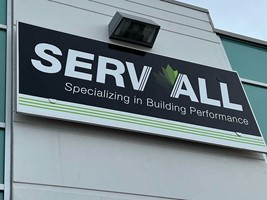
Channel letters are 3D letters with a hollow channel inside. They are often used for illuminated signs with LED lighting and are commonly seen on storefronts and business signs. They are one of the most recognizable forms of exterior dimensional signage.
Full logo shapes cut from solid materials and mounted with standoffs or flush to the surface. These are popular for lobbies, conference rooms and branded environments.
Freestanding dimensional signs typically placed near the entrance of a property or campus. They combine dimensional lettering with a solid base for high-visibility identification at street level.
Custom dimensional signs do more than display a name. They help people find where they need to go and understand the space around them.
When visitors, patients or customers arrive at your location, signs and graphics help them identify where they are and how to get where they want to go. By incorporating dimensional elements into a wayfinding system, businesses can create directional signage that is both functional and visually consistent with their brand.
Integrating wayfinding with decor elements ensures that people are not only guided around your facility or campus, but are also receiving a consistent brand experience.
For multi-floor buildings, large campuses or properties with multiple tenants, dimensional signs help reduce confusion. They make it clear where visitors should go, while keeping the space looking polished and intentional.
One of the biggest decisions you will face is whether to add lighting.
Illuminated 3D signs and lettering can be lit from the front, back or sides to improve visibility and create a bold branded effect day and night. Backlighting (also called halo lighting) creates a glow around each letter, while front-lit options illuminate the face of the letters directly.
Non-illuminated signs rely on shape, shadow and material finish for impact. They work well in interior settings or locations where ambient light is sufficient.
Your decision should be guided by where the sign will be placed, how much natural light the area gets and whether your sign needs to be visible after dark.
It is also important to know that not all locations permit illuminated signage. Illuminated signage like LED and digital displays often require permits to ensure compliance with local ordinances. Rules vary by community. Signage in historic districts often faces strict guidelines to maintain the area's character, with limitations on style, materials and colors. Even in commercial zones, restrictions may apply to illuminated signage or sign brightness.
The Image360 team can help you sort through what is and is not allowed in your area. They will review local sign codes, assist with the permitting process and recommend the best approach based on your location. If illuminated signage is not an option, they can suggest non-illuminated alternatives that still create strong visual presence using the right combination of materials, mounting and placement.
Either way, the goal is a sign that works for your brand and your location from the start.
How a dimensional sign is installed affects both its look and its visual impact. Common mounting styles include:
Flush mount: letters sit directly against the surface for a clean, seamless look
Stud mount with spacers: Also called standoffs, letters or logos are raised or "floated" off the wall, creating shadows and added depth
Adhesive mount: used for lighter materials like foam or thin acrylic on interior walls
The right mounting method depends on the wall material, the sign's weight and the visual effect you want to achieve.
The right dimensional sign can change how people see your business, both outside and in. Whether you are upgrading a storefront, refreshing a lobby or building out a full interior brand experience, dimensional signage is one of the most effective ways to create lasting visual impact.
Start a conversation with Image360 by calling [phone] to explore materials, styles and placement options for your space.