Indoor signs

2/24/2026
Creating an accessible environment isn’t just a legal requirement, it’s a smart business decision. Accessibility signage compliance helps ensure that all visitors, including those with disabilities, can navigate, understand and comfortably use your space. From parking lots to interior hallways, signage plays a critical role in accessibility and inclusion.
For business owners, understanding accessibility signage requirements can feel overwhelming. The guidelines cover everything from font styles and tactile elements to mounting heights and placement. The good news? With the right approach and the right signage partner, compliance is achievable and sustainable.
Below are five essential tips to help ensure your business is accessibility signage compliant, with a focus on signage that meets both legal standards and real-world usability.
The foundation of compliance starts with understanding accessibility signage guidelines. These standards are established by the Accessible Canada Act (ACA) and are enforced to ensure consistency and accessibility across public and commercial spaces.
At a high level, accessibility signage must:
Use non-glare finishes
Feature high-contrast colours between text and background
Include tactile (raised) characters where required
Use Grade 2 Braille for permanent room identification
Be mounted at compliant heights and locations
Not all signs in your building require tactile elements, but permanent room signs do. These signs include ones for washrooms, offices, exits and stairwells. Directional and informational signs may have different rules, which is why understanding the distinctions early in the process is essential.
Failing to follow these guidelines can lead to failed inspections, complaints or costly retrofits. Starting with compliance-first design saves time, money and frustration.
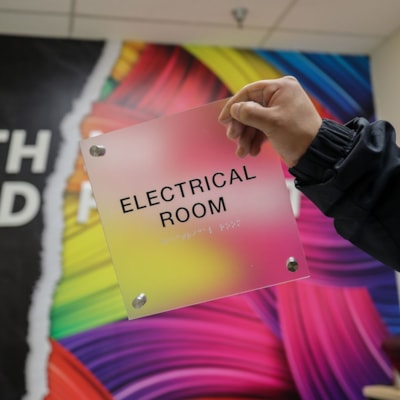
One of the most common compliance issues involves accessibility room signage. These signs identify permanent spaces and must meet specific requirements to be considered compliant.
Accessibility room signage requirements include:
Raised characters that are at least 1/32 inch thick
Sans-serif fonts that are easy to read
Characters mounted with the baseline between 48 and 60 inches from the floor
Grade 2 Braille placed directly below corresponding text
Equally important are accessibility Braille signage requirements, which specify dot spacing, placement and readability. Improper Braille, such as incorrect spacing or non-compliant translation, can render a sign unusable and non-compliant.
Using professionally produced custom accessibility signage ensures these details are handled correctly, eliminating guesswork and reducing liability.
Accessibility doesn’t stop at individual rooms. Visitors need to navigate your entire space confidently, which is where accessibility wayfinding signs and accessibility directional signage come into play.
Wayfinding signage helps guide people from one point to another, such as from entrances to elevators, washrooms or service counters. While not all wayfinding signs require Braille, they must still meet visibility, contrast and placement standards.
Effective accessibility wayfinding signs:
Are placed consistently at decision points
Use clear, simple language
Avoid visual clutter
Maintain high colour contrast
Are readable from appropriate distances
When done correctly, accessibility wayfinding signage improves the experience for all visitors, not just those with disabilities. Clear navigation reduces confusion, improves traffic flow and creates a more professional environment overall.
Compliance extends beyond your front door. Accessibility exterior signage is just as critical as interior signs and is often the first thing visitors encounter.
Accessibility parking signage must clearly identify accessible parking spaces, including van-accessible spots where required. These signs must:
Be mounted at proper heights
Include the International Symbol of Accessibility
Remain visible even when vehicles are parked
Inside and outside your building, accessibility exit signage must be clearly marked and easy to identify, especially in emergency situations. Exit signs should be placed consistently and never obstructed by décor or temporary displays.
Additionally, accessibility interior signage, such as directories, elevators, stairwells and washrooms, must work together with exterior signs to create a seamless, accessible experience from arrival to departure.
Even perfectly designed signs can fail compliance if they’re installed incorrectly. Accessibility signage height requirements are strict and often misunderstood.
Key placement rules include:
Wall-mounted tactile signs must be installed on the latch side of doors
The baseline of the lowest raised character must be at least 48 inches from the floor
The baseline of the highest raised character must be no more than 60 inches from the floor
Signs must be placed where they won’t be obstructed by open doors or furniture
Proper placement ensures that individuals who rely on touch or close-range reading can easily locate and use signage. This applies to everything from accessibility room signage to washroom signs and stairwell identifiers.
Working with experienced signage professionals helps ensure both design and installation meet accessibility standards—avoiding compliance gaps that can trigger violations.
Accessibility compliance isn’t a one-time task. As your business grows, remodels or changes layouts, your signage must evolve with it. Regular audits of your accessibility signage requirements help ensure continued compliance and demonstrate your commitment to accessibility.
Beyond meeting legal standards, accessible signage sends a powerful message: your business values inclusion, usability and customer experience.
At image30.com, we specialize in custom accessibility signage solutions that meet regulatory requirements while aligning with your brand. From accessibility directional signage and wayfinding signs to compliant room, parking, interior and exterior signage, our team helps businesses create spaces that work for everyone.
If you’re unsure whether your current signage meets accessibility signage guidelines, now is the time to review, update and invest in accessibility, because compliance isn’t just about following the rules, it’s about welcoming every visitor with confidence.